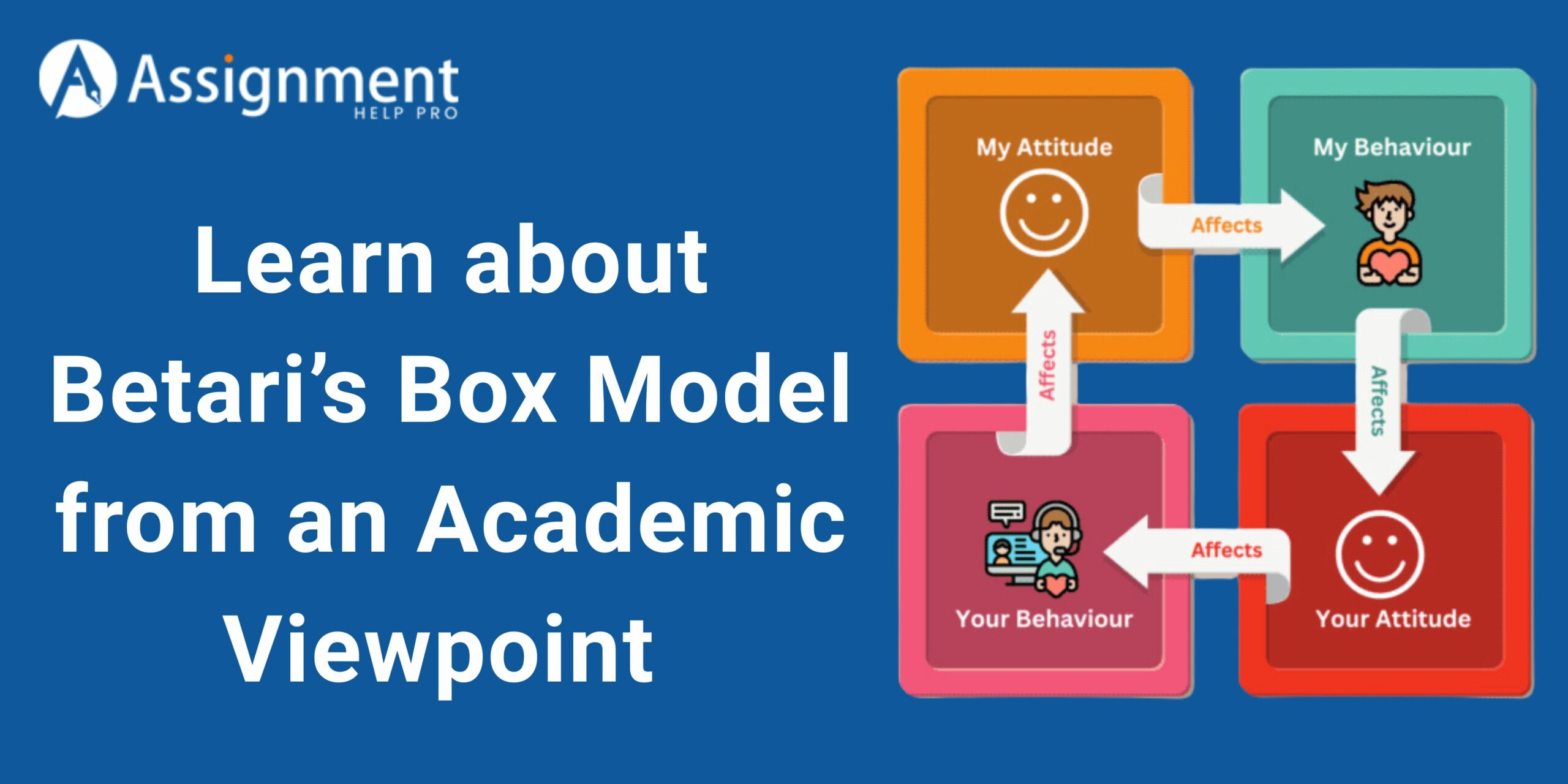
From an academic view, the Betari’s Box model shows how your attitudes affect your behaviour and the results you get. It explains that interactions follow a cycle, and changing attitudes can improve outcomes, communication, and performance.
In your daily life, no matter whether it is school, work, or home, your attitude will influence your behavior and the people around you. So, to achieve good outcomes, you need to change the way you think or behave. Usually, the Betari’s Box model plays a key role in helping you understand this and how changing your attitude can lead to good outcomes. Specifically, it will be more beneficial for you in academic aspects. If you are curious to learn about the Betari’s Box model, read this blog. Here, we have discussed what Betari’s Box model means, its advantages and disadvantages, and how you can apply it in your academic work, such as essays and presentations.
Understanding the Betari’s Box Model
The Betari Box Model, or Betari’s Box, is a simple circular diagram that illustrates the relationship between our attitude and behavior and the behavior of others. With this theory, you can solve conflicts in teams and also detect problems between different departments, or between a company and its suppliers, local communities, or even individuals.
You may be wondering who developed the Betari Box, but unfortunately, there is not much information available about its history. The Betari Box is named after the Persian city of Betari, which is located in Iran today, and it is also found in the Bible. But it is not clear how these connections are related to the diagram, although they certainly add an interesting history to the diagram.
The Betaris Box theory is very valuable in organizational learning because it gives a simple explanation of how the interactions between people affect the workplace. Also, it promotes self-awareness, shared responsibility, and a positive workplace environment.
Exploring the Core Elements of the Betari’s Box Theory
The Betaris Box attitude-behavior model is based on a number of interrelated parts. It describes how the working environment influences behavior and why it is hard to change behavior without changing attitudes first. The model contains a number of key components, and some of the most important ones are outlined below.
Mindset and Outlook
Attitude is the foundation of the Betaris Box. Generally, it encompasses how people think, feel, and behave towards their work, coworkers, and superiors. Moreover, these attitudes are developed through experience, company culture, and leadership style. A positive attitude can keep people open and receptive, while a negative attitude can limit thinking and behavior.
Expressed Actions
Behavior is the observable action that stems from a person’s attitude. It usually encompasses how people communicate, follow the rules, solve problems, and relate to other people. Behavior is not always random; it expresses how people feel and what they believe.
Outcomes and Repercussions
Results are the outcomes that are generated by behavior. In an organization, results may include performance, quality, customer satisfaction, and safety. However, results are not the final process. Negative results can lead to negative attitudes, while positive results can boost confidence.
Feedback and Influence
Feedback is a critical component of the Betaris Box, which connects attitudes, behaviors, and outcomes. This cycle illustrates why negative cycles will continue if they are not interrupted and how positive cycles can be developed. It also emphasizes that changing behavior will not solve the problem unless the attitude is changed.
Leadership Involvement
Though it is not mentioned as a distinct element, leadership is a very important part of this model. Leaders can shape attitudes through their communication, reaction to errors, recognition of efforts, and accountability standards. However, the basic intention is to change thoughts and perspectives rather than just forcing compliance.
How the Betari’s Box Functions: A Step-by-Step Guide
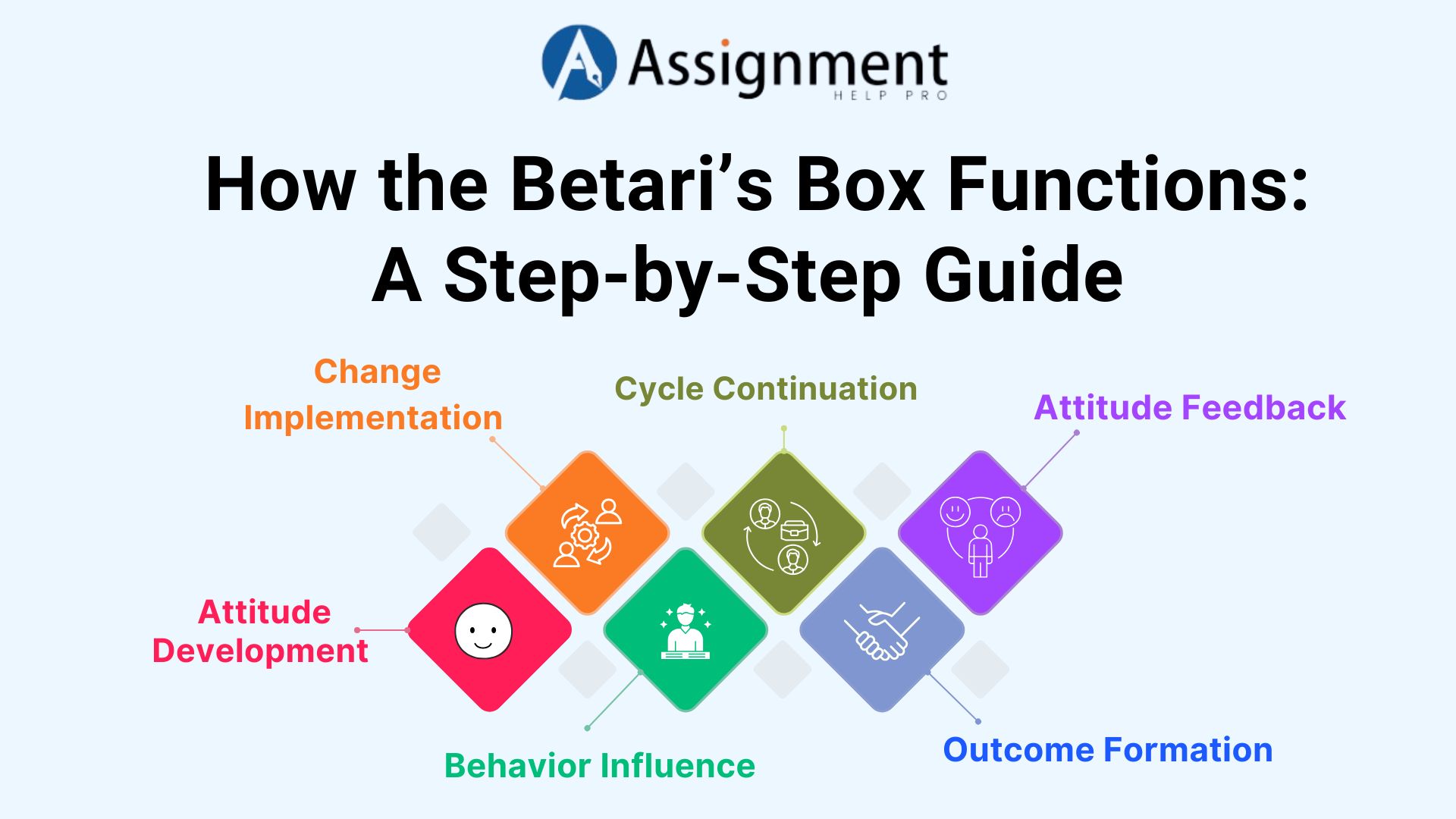
The Betari Box model in management illustrates how attitudes, behaviors, and results interact in a cycle. This cycle is helpful in understanding where to focus in order to bring about change. Below is a step-by-step explanation of how the Betaris Box attitude-behavior cycle works.
Attitude Development
Attitudes will be created by your experiences, what you expect, and what is happening in the world around you. A positive attitude may consist of trust and motivation, while a negative attitude may consist of frustration and disengagement.
Behavior Influence
Your thoughts and feelings will be reflected in your behavior. For instance, a positive attitude will lead to cooperation, and a negative attitude will lead to ignoring others.
Outcome Formation
Your behavior will have a direct impact on the outcome. The overall result could be team performance, your own success, or your interactions with others.
Attitude Feedback
As a consequence, the outcome of success or failure will reinforce your existing attitudes. This will generally lead to a repetition of similar behavior in the future.
Cycle Continuation
Thus, this cycle or pattern will continue until you make a deliberate change.
Change Implementation
Finally, by making a conscious decision to have a positive attitude or change your behavior, you can change the cycle and experience better outcomes.
Real Life Examples of Betari’s Box Model
Here are some real-life examples that show how the Betari’s Box works in practice. If needed, you can get Online Exam Help from professionals to effectively use the model for educational activities.
Classroom Scenario
In a busy classroom, a teacher faces disruptions from one student. Using the Betari’s Box framework, it becomes clear how her attitude affects her behavior and, in turn, the student’s response. When she feels frustrated, she often reacts sharply, which the student perceives as hostility. This response creates a negative cycle, reinforcing both the teacher’s frustration and the student’s misbehavior. By applying the principles of Betari’s Box, the teacher can consciously change her attitude and approach the student calmly. This shift in mindset will definitely lead to more cooperative behavior, better communication, and a more positive classroom environment.
Workplace Scenario
In a company, a team leader experiences frustration because of consistently missed deadlines. The Betari’s Box model illustrates how the leader’s mindset influences their actions and shapes the team’s reactions. Generally, when the leaders take a critical approach, their communication can become sharp, increase stress among employees, and reduce overall performance. However, by following Betari’s Box principles, the leader can adopt a more understanding attitude. This adjustment will promote supportive behavior, create a positive workplace atmosphere, and ultimately enhance team efficiency and communication.
Benefits and Drawbacks of Using Betari’s Box Framework
Like any theoretical model, the Betari’s Box model also has both benefits and drawbacks.
Advantages
- Promotes self-awareness and accountability through personal attitudes and behavior
- Easy to understand and apply in everyday life
- Assists in conflict resolution by encouraging positive attitudes and ending negative cycles of behavior
- Flexible and can be applied in different contexts, such as team building, leadership, and relationship building
Limitations
- Breaks down complex interactions, as many other external factors, such as social norms, also impact behavior
- Fails to take into account many external factors, such as personal experiences or work pressure
- When applied incorrectly, it impacts relationships but does not determine other people’s behavior
- Takes time, effort, and self-control to change negative patterns
By understanding these pros and cons, you can apply Betari’s Box model effectively in real life. If it is challenging to apply the model, get Psychology Assignment Help from experts online.
How to Use Betari’s Box Model for Assignments
The Betaris box model of conflict resolution can be used to design assignments by identifying inputs, processes, outputs, and feedback. Here is a step-by-step guide on how to apply Betari’s box model for academic tasks:
- Firstly, make a list of all the things you will need to complete the assignment, such as materials, information, instructions, prior knowledge, and resources.
- Next, outline the steps you will take to complete the assignment, such as research, analysis, and writing.
- Then, decide on the outcomes you want to accomplish, such as a report, presentation, or finished project
- Lastly, plan ways to review your work, get feedback from peers or instructors, and improve it before submission.
Conclusion
The Betari’s Box model helps you see how attitudes and behavior affect interactions and results. Also, understanding this cycle allows you to stop negative patterns and create positive outcomes in work, relationships, and academics. As a result, you can improve communication, performance, and personal growth. Utilize Online Assignment Help Services from our team of psychology experts if it is challenging for you to apply Betari’s box model in your academic work.
FAQs
1. What is the central message of Betari’s Box model?
It illustrates how attitudes influence behavior and how the results create a cycle, with a focus on the importance of changing attitudes.
2. Can Betari’s Box model resolve conflicts?
Yes, by recognizing and modifying negative attitudes and behaviors, Betari’s box can help decrease tension and improve interactions.
3. How is Betari’s Box framework useful in everyday life?
It promotes positive teamwork, communication, and relationships in the school, workplace, and home.