

We have all experienced it: sitting in a stifling classroom, staring at the clock, only to realize that what felt like 30 minutes was actually just three. When you are disengaged, overwhelmed, or bored, a 50-minute lecture can feel like an eternity.
However, trying to make school go by faster by constantly checking the clock, daydreaming, or counting down the minutes actually triggers a psychological phenomenon called “time-dragging.” Neuroscience shows that when your brain is passively waiting for an event to end, it focuses hyper-intently on the passage of time, making it feel up to 50% slower.
The true secret to making time fly at school is entering a state of cognitive flow—an active mental zone where you are so focused on a structured task that your brain loses track of time entirely.
Whether you are trying to survive a monotonous lecture, get through a difficult math period, or stay energized during the afternoon slump, here are 12 proven, psychology-backed strategies to make a school day go by faster while boosting your grades in the process.
Do Educational Institutions Get Affected By Long School Hours?
Long school hours have negative impacts on a school’s financial budget as well. Here are some prominent reasons:
- Increased salary – Lengthy school hours indicate that teachers and nonteaching staff work for a longer time. As a result, academic institutions have to compensate them more for their longer working hours.
- Higher operational costs – With the extended school hours, there is an increase in the daily operational expenses. It means schools spend more money on heating, cooling, sanitization, water, and electrical facilities.
Why Does School Feel So Slow? (The Science of Time Perception)
To manipulate how fast time feels, you first need to understand how human brain chemistry processes time. According to cognitive psychologists, human time perception depends on attention allocation:
- The Clock-Watching Trap : When you are bored, your brain has excess cognitive capacity. It uses this leftover energy to monitor your environment and track time. Every glance at the clock reinforces your brain’s awareness of how slowly seconds are passing.
- The Power of “Flow States” : Coined by psychologist Mihaly Csikszentmihalyi, a “flow state” occurs when your skill level perfectly matches the challenge of a task. When you actively engage in Cornell note-taking, problem-solving, or interactive discussion, your brain releases **dopamine and norepinephrine**, completely shutting down the neural circuits responsible for tracking time.
Instead of trying to ignore the clock, your goal should be to reallocate your brain’s attention into high-engagement classroom activities.
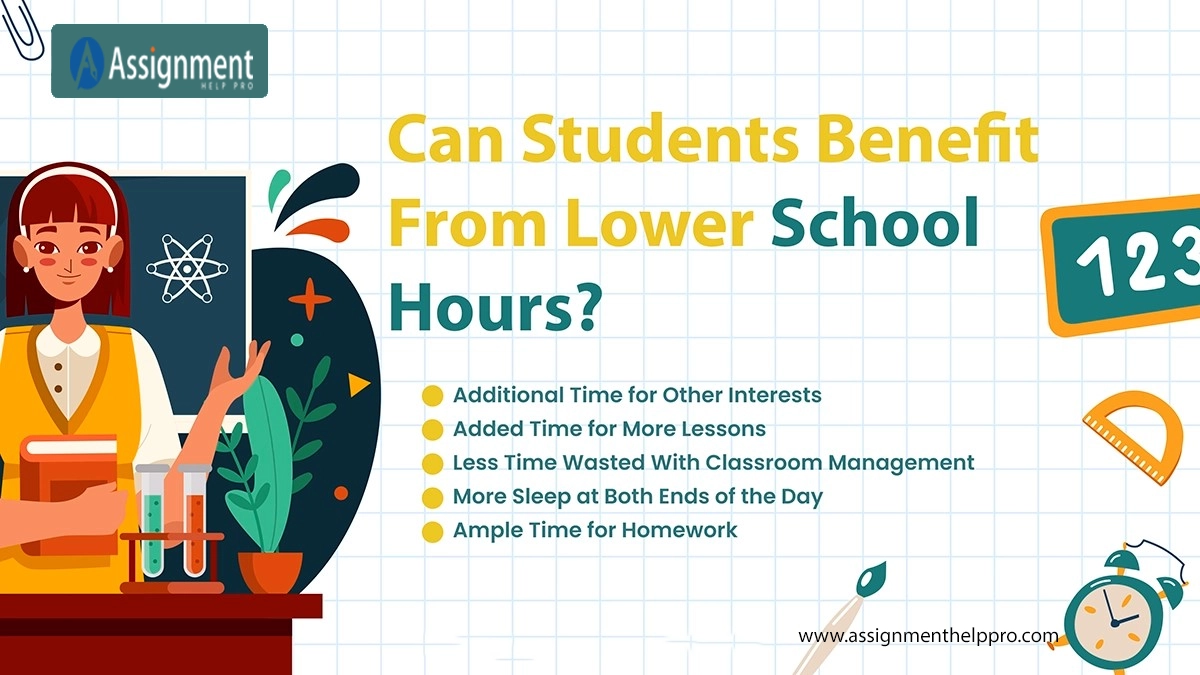
Can Students Benefit From Lower School Hours?
Restricting school hours can help students in multiple ways. Here are a few notable things that you can enjoy if school timings are reduced.
Ø Additional Time for Other Interests
Some students want to expand their careers in areas that are not taught in school. When they have enough time to discover the subjects they find interesting, they probe the subject more deeply and gain a strong foothold on what they would prefer to do after graduation.
If educational institutes reduce the school hours, these tasks become easy and help in the development of the children.
Ø Added Time for More Lessons
Not all students learn at the same pace. Some catch the study elements quickly, while others need time to catch up on them. Moreover, at times, students try to catch up on their studies after an unexpected period of absence from learning. However, if students spend fewer hours in school, they will not need to take on the additional pressure of finding time from their schedule to study what they are lagging in. Instead, they will find free time naturally to utilize for the task.
Also Read: Interesting School Speech Topics For Students To Consider
Ø Less Time Wasted on Classroom Management
In the present education system, the teacher-to-student ratio is quite high in most schools. When teachers put their efforts into making all students work on various tasks, a lot of the school day gets wasted. However, if educationists review how to make school go faster, chances are less for students to zone out faster, and they will not feel that the time is dragging on.
Ø More Sleep at Both Ends of the Day
Rushing children and teenagers out for school early in the morning every day negatively impacts their academic performance. A study suggests that individuals below the age of 18 must have 8-10 hours of sleep daily.
However, the class timings from 8:30 am in most American schools hamper their sleep cycles, which reduces their executive functioning, cognitive development, and emotional regulation. They have to wake up in the early morning for the long school hours and study till late at night. It curbs their sleep on both ends of the day.
Ø Improved Family Dynamics and Reduced Stress
Good family dynamics have a deeper impact on the psychological and cognitive development of a child. However, the early school hours break this relationship. Waking up early can lead to arguments day after day in some households.
But, if the schools begin a bit later, family relationships can improve, and the bond between parents and children becomes deeper. With it, there will be a striking improvement in the mood of the entire family.
Ø More Time to Appreciate Learning
Students can learn more if they are eager to collect more information. Plus, their inquisitiveness towards the subject and appreciation of the learning process will help them absorb study materials more quickly.
But, unfortunately, most students in America dread the long day ahead in school instead of appreciating the subject material. However, if school hours are short, students can focus more intensely on their work.
Ø Ample Time for Homework
When school hours are spread out throughout the entire day, combined with many extracurricular activities, many students feel overwhelmed and work on their tasks till late at night. It affects their health, mind, and all aspects of life. Conversely, a shorter school day allows students to practice extra activities, while still giving way ample time to complete their homework.
How To Make Time Go Faster At School?
Here are 10 hacks you can apply to make the school hours pass faster:
Read More: Primary School Teacher in Australia- Eligibility, Job Role, Career Options, and Salary
1. Perform any Creative Task
One activity that will help you handle your boring class is drawing. It is not a productive method for taking notes of the lectures, but it helps you pass the time. Moreover, evidence proves that doodling helps in retaining information while listening to it. So, if your moral values are quite high and you are a strict believer in karma, you will not really feel like wasting your time. Simple outlines of abstract shapes, cartoons, or sketching out the names can help you make the best use of time.
2. Engage in class discussions
Taking part in class lectures or discussions is the best way to kill time in school. 5 minutes of the lecture will feel like an entire lifetime if you do not lift your finger or move your mouth. However, if you place your queries on the subject to your class teacher or classmates and engage in an active academic conversation actively you will never realize when the time flies.
3. Read Books
There is hardly any task in this world that makes one forget about time other than reading books. Reading school-recommended books for various subjects is an excellent way to utilize time. However, you can study novels and storybooks in your free time as well.
4. Make study buddies
You may have many friends in school, but your studying habits may never match those of most of your classmates. Therefore, pick friends who study in a similar way as you do, and use your free time in school to mull over the complicated subjects. This way, you will attain your academic goals and enhance your grades without spending additional time on it.
5. Daydream
If you have a vivid, imaginative mind, let your mind wander and pass the boring hours in school. Though not many educationalists will conform to this method, at least you can pass the time without landing in trouble. Nonetheless, come back to reality from your dreamland when your teacher shares something important.
6. Go to the Bathroom
If your school regulations allow you to go to the bathroom during a class, use it to your advantage. When you find a class boring, even the study and the stingy bathroom can feel like an escape. However, use it justifiably. It may never happen that you miss out on important discussions of the lecture while you are enjoying your free time in the bathroom.
7. Do Homework
Homework does not mean that you have to do the task at home. Teachers give this task to help you revise your class discussions. If you find free time at your school, use it to complete your homework. It will hit two birds with one stone – you will use up the time and reduce the pressure for doing the homework as you reach home.
8. Do petty tasks
How often do we complain of lacking the time to devote ourselves to and work on things we enjoy? If you have free time in school and are confused about how to make school go by faster, why not use it for doing micro-tasks that you enjoy? Playing individual mind games, writing diaries or short stories, and observing are just a few examples. This way, you will never realize the minutes or hours spent.
9. Engage in activity clubs
Almost all schools in the USA have activity clubs, ranging from gardening to foreign language learning. Use your free period to spend time in the activity clubs. Take a membership and engage in fun activities you enjoy. You will never realize the hours or minutes that went by.
10. Ignore the clock on the wall
After all this advice and tricks on to-do things, let us share one thing that you must never do to make school go by faster – look at the clock. Just like the adage goes, “a watched pot never boils,” time never passes quickly by looking at the clock. It makes every minute more dreadful. Plus, you become more hyper-aware of how slowly time is moving. So, stare at your eyes from the clock, if you want to pass the time.
6 Active Classroom Hacks to Make Lectures Fly By
1. Gamify Your Note-Taking With the Cornell Method
Passive listening is the number one cause of classroom boredom. Transform note-taking into an active game using the Cornell Note-Taking System:
- Divide your paper into three sections: Cue Column (left), Note-Taking Area (right), and Summary (bottom).
- Challenge yourself to capture only the core concepts in the right column, formulate potential exam questions in the left column on the fly, and write a 2-sentence summary before the bell rings. This active filtering keeps your brain too busy to track time.
2. Practice the “15-Minute Sprint” Technique
A 60-minute class feels daunting, but a 15-minute block is effortless. Break every period down into four micro-sprints:
- Minutes 0–15 : Focus entirely on writing down definitions and key terms.
- Minutes 15–30 : Focus on analyzing how the teacher is structuring the lesson.
- Minutes 30–45 : Write down two questions or real-world connections about the topic.
- Minutes 45–60 : Organize your notebook and prep for the next class.
3. Become an “Active Anticipator”
Instead of letting words wash over you, try to predict what the teacher is going to say next. If they are solving an equation on the board, try to calculate the next step before they write it down. If they are explaining a historical event, guess the outcome before they reveal it. Anticipation turns a passive lecture into an interactive puzzle.
4. Ask One Strategic Question Per Class
Make it a personal goal to ask at least one insightful question during every period. To do this, you have to listen closely to find a gap in the explanation or a curious detail. Once you raise your hand and engage in a dialogue with the teacher, the social engagement will instantly accelerate your perception of time.
5. Utilize “Visual Mapping” for Dense Subjects
If you are visual learner stuck in a heavy lecture (like History or Biology), stop writing bullet points. Instead, draw mind maps, flowcharts, and conceptual diagrams connecting how idea A leads to idea B. Translating verbal words into visual structures requires deep spatial processing, making a 40-minute period feel like 10 minutes.
6. Do a “Mental Screen Reset”
If your eyes are glazing over during a PowerPoint presentation, practice the 20-20-20 rule: every 20 minutes, look at something 20 feet away for 20 seconds. This physical eye reset reduces optic fatigue, lowers brain fog, and re-sharpens your classroom focus.
How to Optimize Your School Routine for Maximum Speed
1. Structure Your Passing Periods
Never sit idly at your desk waiting for the next class to begin. Use your 5-to-10-minute passing periods to physically reset:
- Walk to your locker or take a longer route to your next classroom to get your blood pumping.
- Fill up your water bottle (dehydration is a primary cause of afternoon fatigue and brain fog).
- Organize your backpack so you sit down feeling structured and prepared rather than chaotic.
2. Create an “Afternoon Anchor”
The school day always drags the most after lunch (the circadian afternoon slump). Give your brain something highly stimulating to look forward to during the last two periods—such as participating in a favorite elective, meeting a study group in the library, or listening to a new podcast playlist on your walk home.
3. Pre-Read the Lesson Plan
Ten minutes before school starts, quickly scan the chapter headings or syllabus for the day’s classes. When you already know the basic roadmap of a lesson, your brain doesn’t have to work as hard to orient itself, preventing cognitive exhaustion and making the lecture progress smoothly.
Productive vs. Unproductive Hacks: What Actually Works?
When trying to make the school day go faster, many students accidentally resort to habits that make time drag even more. Here is how to swap common unproductive habits for high-speed, cognitive alternatives:
| Unproductive Habit (Makes Time Drag) | Why It Fails | Productive Cognitive Hack (Makes Time Fly) |
|---|---|---|
| Staring at the clock / Countdown timers | Hyper-focusing on time increases temporal awareness by 50%. | Hide your watch/clock and set a 15-minute note-taking sprint goal. |
| Mindless doodling or drawing cartoons | Disengages your brain from the lesson, making the remaining class time feel tedious. | Visual Sketchnoting: Illustrate the actual lesson concepts using diagrams and icons. |
| Taking excessive bathroom breaks | Breaks classroom immersion; returning to a missed lesson causes anxiety and boredom. | Active participation: Ask a targeted question or volunteer to solve a problem on the board. |
| Daydreaming or zoning out | Leads to “time-dragging” as the brain struggles with under-stimulation. | Anticipative listening: Try to predict the teacher’s next point or formula calculation. |
| Slouching at your desk | Reduces oxygen flow to the brain, triggering sleepiness and afternoon lethargy. | The 20-20-20 Posture Reset: Sit up straight, hydrate, and shift your visual focus every 20 minutes. |
Conclusion
Discussed are the best answers on how to make school go faster. However, we will still suggest you not rely on a single method. If possible, use most of them in combinations of one with another. However, if you still struggle to find a suitable answer to this significant issue or need help with your academic papers, connect with us immediately for assignment help. The expert from our team will guide you in handling all your academic tasks.